
All Pakistani moves towards peace will be seen as tactical compromises, to be abandoned when the situation changes, observes Colonel Anil A Athale (retd).

'All enemy positions lay exposed, providing immense information to the Indian Army and IAF to conduct successful flushing out operations.'

'The COVID-19 pandemic must push the military into a long-term reconsideration of its primary challenges.' 'There must be greater emphasis on humanitarian aid and disaster relief including the management of contagious illnesses and impending crises caused by climate change,' notes Ajai Shukla.

'India has ramped up infrastructure on its side, so the Chinese military is finding Indian soldiers in locations where they are not used to seeing an Indian footprint,' points out Harsh V Pant.

The stadiums at Qatar offer plenty of wisdom and chutzpah on how to take our own lives forward.

The experts also said China's military 'misadventure' may have been driven in part by President Xi Jinping's attempt to show 'gains somewhere" after the growing global criticism against his country over the origin of COVID-19.
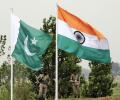
'When the Indian Army carries out anti-infiltration ops, the Pakistan army willy-nilly will get involved in some way. So, it is imperative for the Pakistan army to act against militant groups.'

Two things keep Shabaash Mithu relevant: Taapsee Pannu and the sheer grit of the Mithali Raj story, observes Deepti Patwardhan.

Indian citizens in Eastern China Region may apply at the Embassy of India, Beijing for availing urgent consular services, the Consulate said in a notice issued on Tuesday.
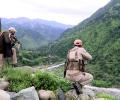
Thinning out of the counter infiltration and counter terrorism grid is fraught with the danger of revival of terrorism in the Poonch-Rajouri area, cautions Brigadier Narender Kumar (retd), the counter-insurgency expert.

'If a stranger refuses to pet my Russian dog, what treatment can I expect for myself?'
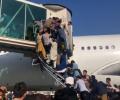
The United States is going to retain a laser focus on its counterterrorism mission in Afghanistan, President Joe Biden said on Friday, and warned the Taliban of a forceful response to any attack on American forces or disruption of its operations at the Kabul airport.

Chinese hubris and the slippery slope it finds itself on have important lessons for authoritarian leaders elsewhere, including in India, observes Colonel Anil A Athale (retd).

When corruption eats into the vitals of a nation, the State structures decompose and collapse. And when the leadership loses respect of the people, the war is lost, asserts Ambassador M K Bhadrakumar, who played a stellar role in beginning India's systemic dealings in Afghanistan in 1994.

With tensions between China and Taiwan rapidly increasing, the tone of China's official media has also become progressively more strident, observes former senior RA&W officer and China expert Jayadeva Ranade.
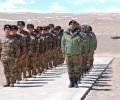
'The Indian government wakes up after the fact when it can do nothing, or rather lacks the will to prosecute military actions to reverse these adverse PLA-driven developments.'

Located in a small township in the eastern part of Bengaluru is IBM's new Security Command Centre, which is surrounded by offices of multinational tech companies. This unit is the centrepiece of IBM's multi-million dollar investment to help businesses prepare for the growing threat of cyberattacks across the Asia-Pacific (APAC) region. This facility is the first of its kind in the region. It helps train in cybersecurity response techniques through highly realistic and simulated cyberattacks.

The navy has significantly expanded its deployment in the Indian Ocean Region deploying a plethora of warships and submarines to create pressure points on China as the maritime space around the Malacca Strait is very critical for its supply chain through sea routes.
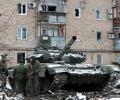
The fault line between the West and Russia has widened into a deep chasm and this is likely to endure in the foreseeable future. Far from forcing its way into the European tent, Russia may be reduced to the status of an even more sullen and weakened bystander on its periphery. The US appears to have won this hand with little cost to itself, observes former foreign secretary Shyam Saran.
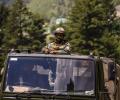
'Our biggest advantage is that the troops are much better trained and motivated than the Chinese and can improvise and manage with a part of the resources.'
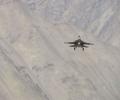
The frequency of day and night operations by frontline fighter jets is a signal that India will continue to put pressure on China until the status quo ante is restored in all the areas in eastern Ladakh including Pangong Tso, Gogra and Hot Springs, government sources said.

Admiral Philips Davidson, Commander of the US Indo-Pacific Command, also told the powerful Senate Armed Services Committee on Tuesday that China's recent activities along the Line of Actual Control have opened India's eyes to what cooperative effort with others might mean for their own defensive needs as he observed that New Delhi, in the very near term, will deepen its engagement with the Quad.

Sri Lanka's embattled President Gotabaya Rajapaksa, under immense pressure from the public and the Opposition to quit over the island nation's worst economic crisis, said on Thursday that the abolition of the executive presidency, a move that will curb his powers, will be considered by Parliament.
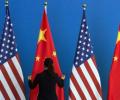
The US maintained normal diplomatic relations with the government in Taiwan until 1979, when then-President Jimmy Carter abruptly cut off formal ties with Taipei and recognised the Communist regime in Beijing.

Pakistan's close ties with China and its lack of democracy and disregard for human rights will not be overlooked, said Haqqani, who currently is a Senior Fellow at the Hudson Institute think-tank in Washington.

'There are three pillars of concern: The expansion of Hindu majoritarianism, the concentration of executive power and decay of independent institutions, and curbs on free expression and dissent.'

Trump had accused Pakistan of providing safe havens to terrorists.

Blinken and Indian leaders on Wednesday will discuss a plethora of pressing issues such as the fluid situation in Afghanistan, regional security concerns, COVID-19 response and ways to boost Indo-Pacific engagement, people familiar with the agenda of talks said.

The Lahore High Court Bar Association said on Friday that it will take action against any lawyer who extends his services to Jadhav.

In a mass email to his supporters after his arrival at the White House, Trump asked them not to be afraid of COVID-19. "I'm telling you: Don't be afraid of COVID. Don't let it dominate your life! This is the greatest country in the world and under the Trump Administration, we have developed some really great drugs and knowledge. WE WILL BEAT THIS, TOGETHER!" he said.

Choose from a range of accessories to make his life easy, enjoyable and stress-free.
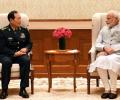
'China's military is expected to deploy full throttle its new equipment including J-20 stealth fighters, drones, medium range missile systems, surveillance and others to continue to put psychological pressure on India,' warns Srikanth Kondapalli, Professor in Chinese Studies, JNU.
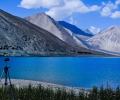
'The use of military power to settle disputes is not always preferred and is the last preferred option, but it certainly remains an option.'
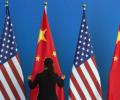
A top United States senator has unveiled an 18-point plan, including enhancing military ties with India, to hold the Chinese government accountable for its "lies, deception, and cover-ups" that ultimately led to the global COVID-19 pandemic.
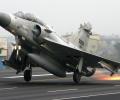
A realistic assessment will tell us that not much has changed between India and Pakistan; the relationship remains as fraught as before with little prospect of reconciliation, notes Ajai Shukla.
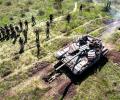
'As long as we have such partners, Russia cannot be isolated.'
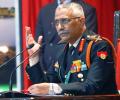
'It is for the first time in about five or six years that the LoC has been silent. That really bodes well for the future'

The army has long been deficient in artillery, the modern battlefield's most lethal killer, says Ajai Shukla.

On December 10, Kissinger began to encourage the Chinese to take action against India: 'If the People's Republic were to consider the situation on the Indian subcontinent a threat to security, and if it took measures to protect its security, the US would oppose efforts of others to interfere with the People's Republic.' On the 50th anniversary of India's greatest military victory, Claude Arpi recalls how the US suggested that China intervene militarily on Pakistan's side.

'If the Chinese are bringing Pakistan more 'behind the curtain,' in terms of intelligence and military cooperation, it will be tailored to their common interests like confronting India over territorial disputes'
